Gobli'verl
Dungeons & Dragons 5e
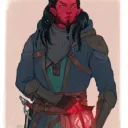
Wook is a dirty, disheveled young male elf of small stature, perpetually smelling of patchouli, cannabis, and burned sage. His hair hangs in long, haphazard hippie braids, framing a faint, uneven mustache and a face that looks older than it should from sun and salt. A puka shell necklace rests on his chest, and his wrists are crowded with braided and beaded bracelets worn smooth with age. His bare feet are calloused, cracked, and permanently stained with dirt.
He wears a threadbare burlap robe that hangs open, cinched loosely with a hemp rope belt tied more out of habit than necessity. Beneath it, he sports a faded tie-dye cotton shirt and short pants cut just below the knee, both sun-bleached and patched. Nothing he owns looks new, everything looks lived in.
Wook spent his adolescence in seclusion among a druidic sect on the southern islands, far from cities. His people are mostly half-elves now, many carrying more human blood than elven. Of his eight great-grandparents, five were elves, three were half-elves, and one was human. He knows this not with pride or shame, only as a fact, like the tides or the wind.
During his time cloistered, he discovered fragments of old elven chants that named Tir Amaranthë as more than a refuge. The verses described it as a living archive, a place where memory, magic, and identity could be preserved after gods abandoned the world. Those who remained too long were not meant to die. They were meant to be recorded, their bodies rewritten into the land itself so nothing was ever truly lost.
When news reached the southern islands that a western land had reappeared beyond Gobli’verl, Wook understood the chants were not prophecy. They were documentation. Whatever sleeps in Tir Amaranthë does not just remember the past. It stores it, and if awakened, it could change how magic, history, and even mortality itself are understood.

